
10 Facts About the Unitree G1 You Probably Didn't Know
Ten lesser-known facts about the Unitree G1 humanoid: from technical details and records to surprising use cases and the story of its creation. Useful for researchers, investors and robotics enthusiasts.
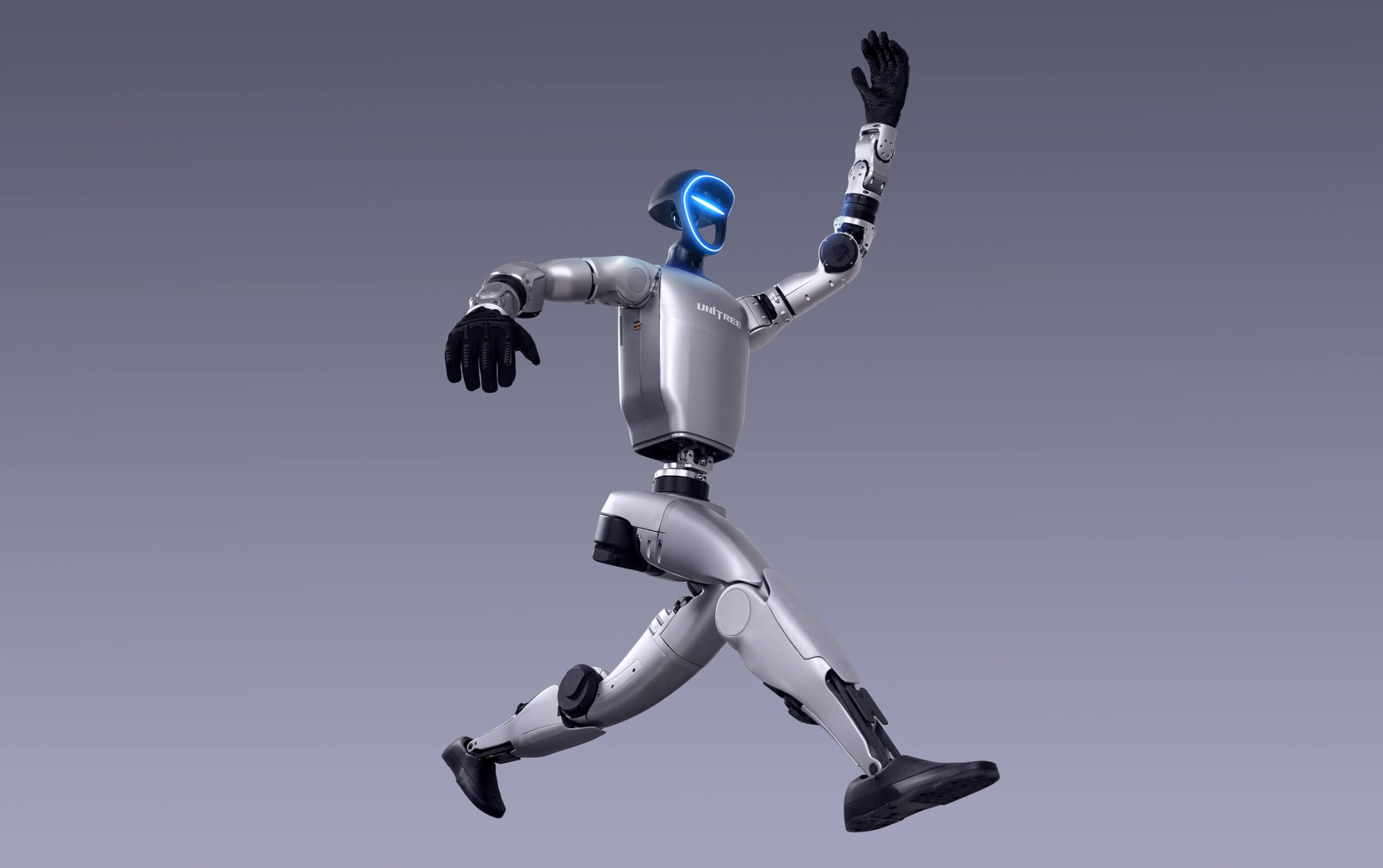
In short: G1 is not just "Unitree's small humanoid". It is the most cited robot in academic literature of 2024-2026, the only openly available humanoid platform with configurations from 23 to 43 DOF, and the baseline model for most embodied AI teams in the world. Below — 10 facts often missed.
This article is for those who already know the basics of G1 but want to dig deeper: researchers, developers, fans, journalists. Each fact is compact, quotable, and where possible linked to a source.
Fact 1: G1 publicly boxes
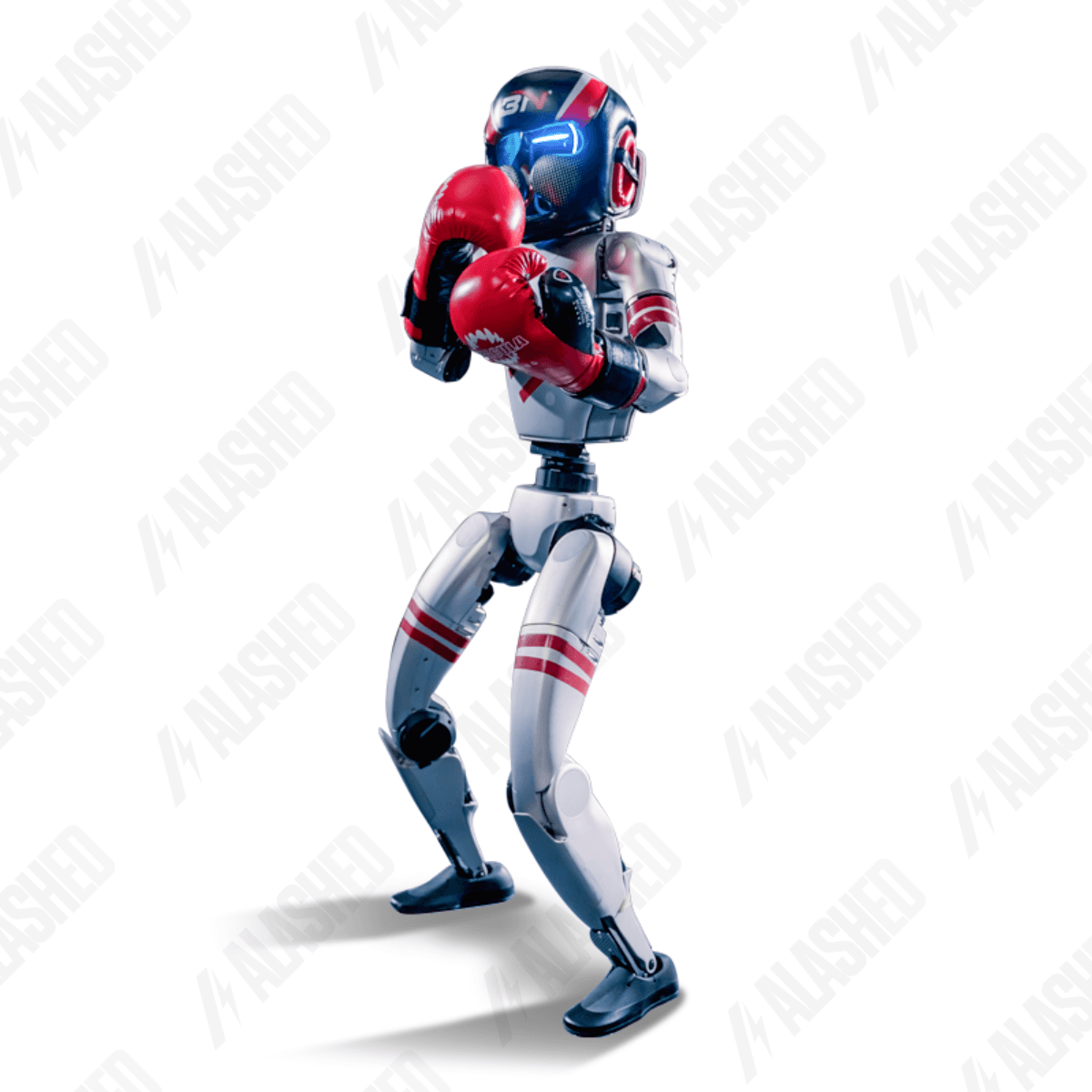
Unitree released the special G1-Boxing variant for shows with a dynamic routine. The robot performs jabs, hooks, defensive moves. This is not "real" boxing with an opponent but a demonstration of coordination and fast manipulation — sparring with a bag or another robot.
Fact 2: Up to 43 degrees of freedom in one model
In the max configuration G1 EDU U7 with Dex5-1P has 43 DOF — more than Tesla Optimus (~28) and Figure 02 (~31) claim. This gives G1 a unique position for complex manipulation research.
Fact 3: The most cited humanoid in academia
Per open searches over IROS, ICRA, CoRL 2024-2025, G1 is referenced an order of magnitude more often than Atlas or Optimus. The reason — open SDK and the real availability of the platform for universities worldwide. "unitree g1" is practically a standard term in modern embodied AI publications.
Fact 4: Supports OpenVLA and Pi-zero out of the box
The community published ready recipes for running OpenVLA, Pi-zero, and π0.5 from Physical Intelligence directly on G1 EDU via the onboard NVIDIA Jetson Orin. This made G1 the de-facto standard for testing modern VLA models.
Fact 5: 132 cm — deliberately below average human
G1 size is not random. A smaller stature gives better stability, lower moment of inertia, safer human interaction, and simpler logistics (fits a standard air container). Industrial humanoids (Tesla Optimus, Figure) are around 170 cm because their task is to replace a human at a workstation.
Fact 6: One charge — 2 hours of active work
Sounds low but it's typical for humanoids today. Tesla Optimus claims ~3 hours (no public test confirmation). Figure 02 — ~5 hours. Most humanoid platforms' real public demos last 5-15 minutes with battery swaps between performances. G1 is more honest than many competitors in this respect.
Fact 7: Open integration with Inspire hands
Beyond native Dex3 and Dex5, G1 EDU U3+ supports Inspire Robotics dexterous hands (RH56DFX etc.) via adapter. Rare for commercial platforms — vendors usually lock accessories to their own ecosystem.
Fact 8: G1 can mimic movements via VR
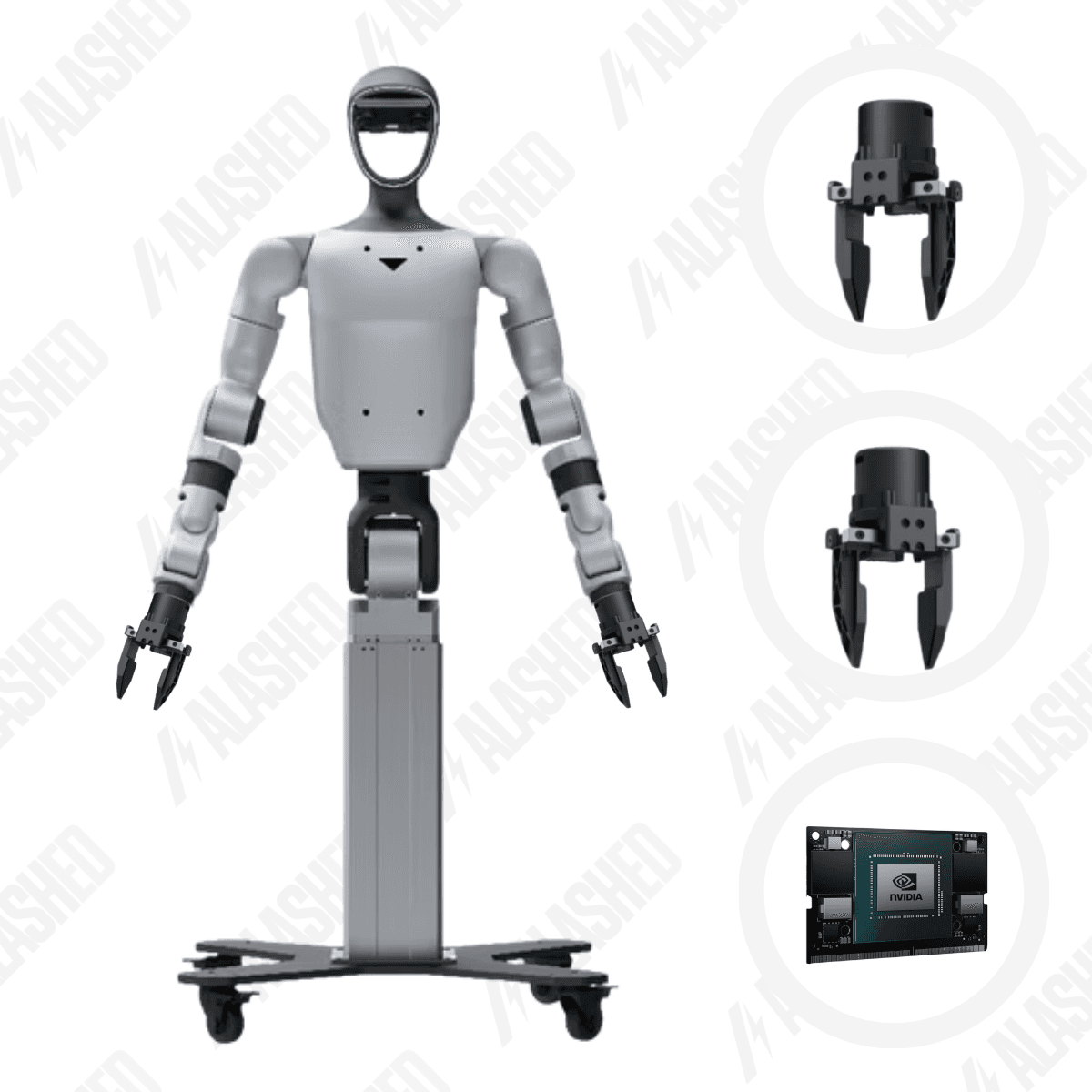
The G1-D version includes VR teleoperation: an operator wearing Meta Quest / Apple Vision Pro controls the robot in real time, movements are copied with ~30-50 ms latency. Used for collecting imitation learning datasets where the robot "learns" from recordings of human movements.
Fact 9: At the Beijing 2022 Olympics it was not G1 dancing, but its predecessors
The Beijing Winter Olympics opening featured 109 Unitree quadruped robots (likely A1/B1). G1 as a humanoid appeared later — in 2024. These events are often confused in public communication.
Fact 10: G1 is the most accessible humanoid in its class
In the mass segment G1 is far more accessible than closed platforms like Tesla Optimus and Boston Dynamics Atlas, which are not available for open purchase. This openness and real-world availability explain why mass G1 adoption in academia and industry is faster than for any other humanoid platform.
humanoid
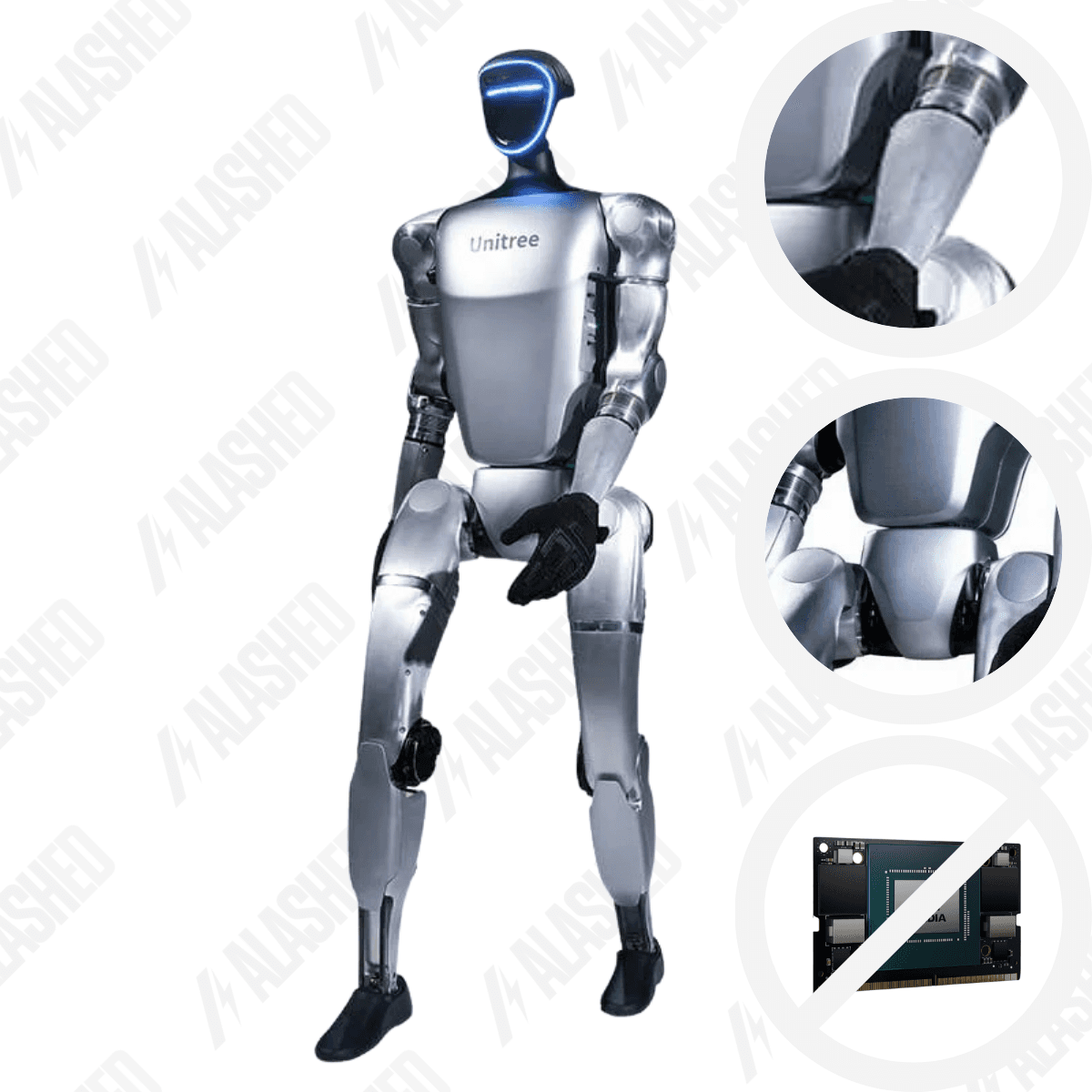
Unitree G1
Гуманоидный AI-аватар
G1 Basic / EDU U1-U7 — all versions available via Unitree.kz.
humanoid
Unitree G1-Boxing
Железный Кулак: Пробуждение
G1-Boxing — a special version for shows with a boxing routine.
humanoid
Unitree G1-D
End-to-End платформа для гуманоидных роботов
G1-D — version for VR teleoperation and data collection.
FAQ
Which G1 version is the most popular?
G1 Basic for shows/presentations and G1 EDU U3-U5 for research — the two most frequent configurations in Alashed sales.
When will the next G1 version ship?
Unitree has not published an official roadmap for G2. Internal rumors mention possible modernization in 2027-2028, but unconfirmed. The current G1 is relevant at least until 2027.
Can I see G1 live in Kazakhstan?
Yes. Alashed regularly hosts demos in Almaty and Astana. You can also book an on-site pilot — 1-7 days.
Источники
- Unitree G1 — official — Unitree Robotics
- Unitree G1 в каталоге — Unitree.kz
Получите расчёт под вашу задачу
Цена зависит от конфигурации и комплектации. Инженер Alashed соберёт КП и предложит подходящую модель Unitree за 30 минут.