
Bionic Robots in Medicine for Diagnostics, Treatment, and Patient Care
AI in diagnostics, surgical robots, exoskeletons, logistics assistants in clinics. Pudu FlashBot, Keenon, Unitree G1.
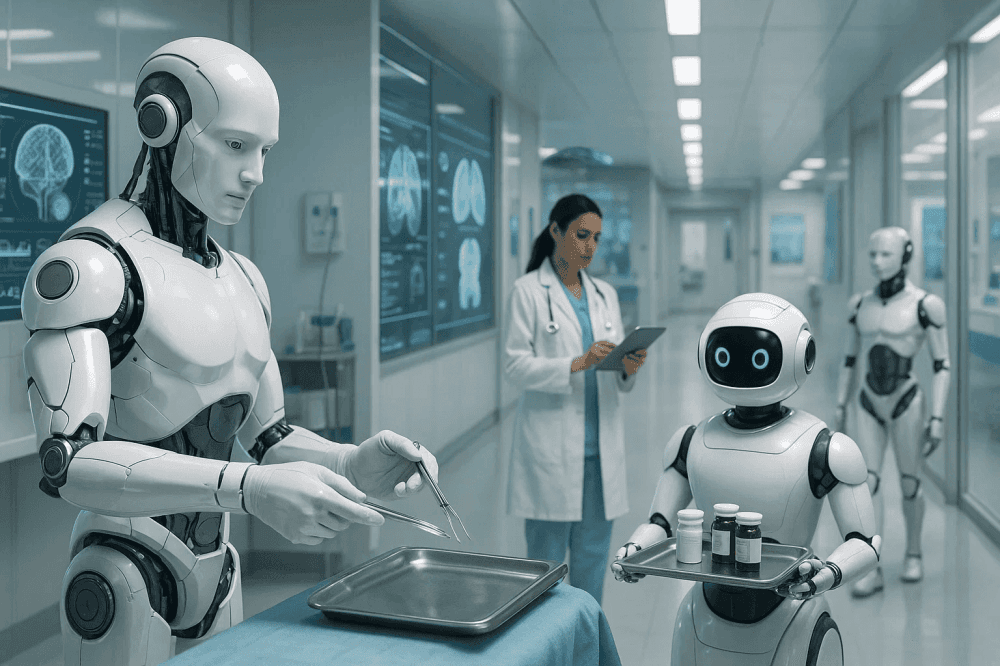
Artificial intelligence in medicine is changing the rules of the game: algorithms help doctors work with large datasets, while robots take over routine logistics and some procedural load — from medication delivery to operating room assistance.
Biorobots for Diagnostics
AI classifies images and signals, while medical manipulators carefully position sensors. The greatest benefit comes from early-stage cancer screening and precision biomarker registration.
Robotic Surgical Systems
Surgical robots provide tremor filtering, motion scaling, and better visualization. In minimally invasive scenarios, they reduce blood loss and accelerate patient discharge.
Bionic Prosthetics and Exoskeletons
Modern prosthetics use myoelectric interfaces and trainable grip profiles. Exoskeletons add supportive torque, reducing fatigue and restoring patient independence.
Patient Care Robots
Logistics platforms handle night runs with biomaterials and consumables. Social mobile systems remind patients about medication, track activity, and alert staff to anomalies.
Models for Clinics
| Model | Purpose | Payload/Shift | Features |
|---|---|---|---|
| Pudu FlashBot Max | Inter-floor courier | up to 10 kg, up to 9 h | Sealed compartments, NFC access |
| PUDU HolaBot | Intra-department delivery | up to 60 kg | Tray collection, sanitary logistics |
| Keenon DinerBot T8 | Team delivery | multi-cycle | Robot 'swarm' coordination |
| Unitree G1 | HRI research | R&D | Care scenario training |
The Future of Biorobots in Medicine
Telepresence in intensive care, robotic manipulators with force control, and 'digital nursing service.' By 2030, neural interfaces for prosthetics will see wider adoption.
Получите расчёт под вашу задачу
Цена зависит от конфигурации и комплектации. Инженер Alashed соберёт КП и предложит подходящую модель Unitree за 30 минут.