
Unitree Robots for Emergency Response and Fire Reconnaissance in Kazakhstan
How Unitree B2 and A2 quadrupeds carry out reconnaissance during fires, gas leaks, collapses and other emergencies in Kazakhstan: thermal imaging, gas sensors, real-time data feed to the rescue service command point.
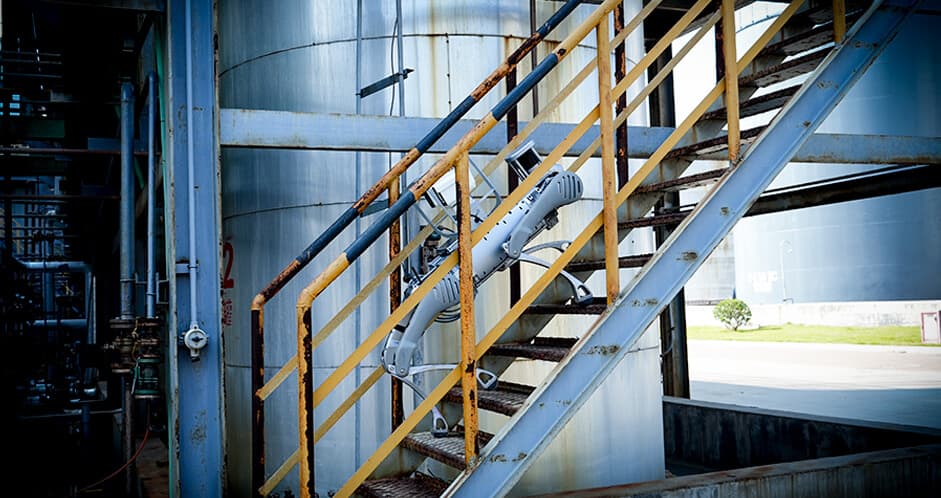
In short: a Unitree B2 or A2 quadruped is the "first echelon" of reconnaissance during an emergency — it enters areas dangerous to humans and feeds the commander a thermal map, air composition, video and the exact location of the fire seat. This shortens the time to rescue start by 10–30 minutes and reduces risk to personnel. Used by the Kazakhstan rescue service, on industrial fires, in man-made accidents and in drills.
This article is for officers of Kazakhstan's emergency service, heads of fire-fighting and rescue divisions, and industrial-safety leaders at large sites (CHP, refineries, GRES, mining complexes) that maintain their own fire crews. We focus on Kazakhstan specifics: −40 to +45 °C climate, remote sites, the rescue-service infrastructure.
What the robot does in an emergency
Fire-seat reconnaissance
The main case. The robot enters a smoke-filled space — a production shop, warehouse, mall, high-rise. The thermal imager finds the fire through smoke; the 4K camera captures the scene; gas sensors detect CO, carbon monoxide and combustion products. The fire-crew commander outside sees what's happening inside and chooses tactics.
Search for people in the hazardous zone
In cave-ins, gas releases, chemical accidents and building collapses every minute matters. The robot's thermal imager finds people by their signature in any conditions (dark, smoke, dust). The robot can go where a dog cannot — across wires and rebar — and needs no rest. Video streams to the command point; rescuers act on point.
Gas leaks and chemical accidents
Applicable to accidents at gas distribution stations, chemical plants, oil depots, and toxic-substance releases. The onboard gas analyzer identifies the leak type (methane, ammonia, chlorine, hydrogen sulfide) and concentration. Until the rescue service arrives, the robot holds the perimeter and keeps people out of the hazard zone.
Drills and training
The robot is used to drill emergency scenarios without putting personnel at real risk. At a training polygon or inside a corporate fire brigade, it simulates reconnaissance, helps build tactics, films a training fire for after-action review. Especially valuable for training new staff.
Emergency conditions: what the robot can withstand
Key requirements — resistance to high ambient temperature (but not direct flame!), smoke, dust and moisture.
| Parameter | B2 | A2 | Emergency requirement |
|---|---|---|---|
| Protection class | IP67 | IP56–IP67 | IP65+ for smoke and water |
| Operating temperature | −20 to +55 °C | −10 to +55 °C | up to +60 °C for recon |
| Battery runtime | 5+ hours | 4+ hours | crew shift 4–8 hours |
| Payload | up to 40 kg | up to 15 kg | thermal + gas + cameras |
| Obstacle clearance | stairs 40 cm, slopes 45° | stairs 25 cm, slopes 35° | stairs, debris, racks |
| Thermal imager | 640×512 / 1024×768 | 640×512 | up to +600 °C to locate fire seat |
| Radio link | Wi-Fi + optional mesh | Wi-Fi + optional mesh | video to command point |
Sensor stack for emergencies
- Thermal imager 640×512 or 1024×768 with up to +600 °C range — primary tool for finding fire and people.
- 4K camera with headlamp and optical zoom — detailed inspection through smoke.
- Gas analyzer: CO, CO₂, CH₄, H₂S, HCl, NH₃ — thresholds from 1 ppm.
- Microphone + two-way audio — speak with a victim through the robot.
- Loudspeaker — to warn people in the hazardous zone.
- 4D LiDAR L2 — SLAM map of a collapsed building without GPS.
- Beacon for robot recall if comms are lost.
Integration with the rescue service and ops comms
The robot integrates into the existing emergency stack: video stream to the command point over secure channels (Tetra, LTE, Wi-Fi), thermal and gas data into the situation centre, coordination with fire trucks and crews via a tactical tablet. IEC 60870, IEC 61850 and MQTT are supported. For remote sites, satellite links (Iridium, Inmarsat) are used.
Recommended models
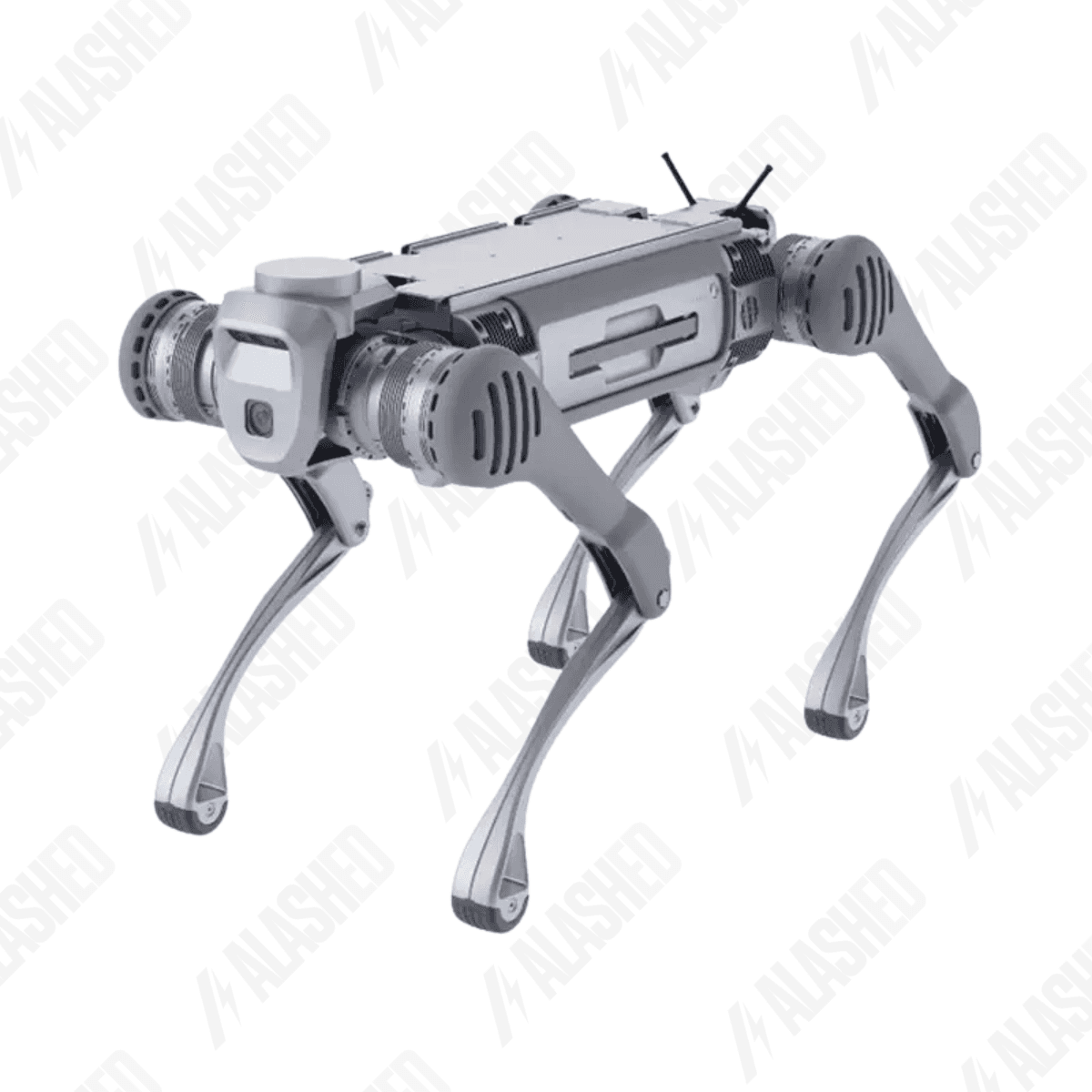
quadruped
Unitree B2
Выйди за пределы возможностей
Baseline platform for complex object reconnaissance — large fires, collapses, chemical accidents. IP67, 40 kg payload for a heavy sensor pack.
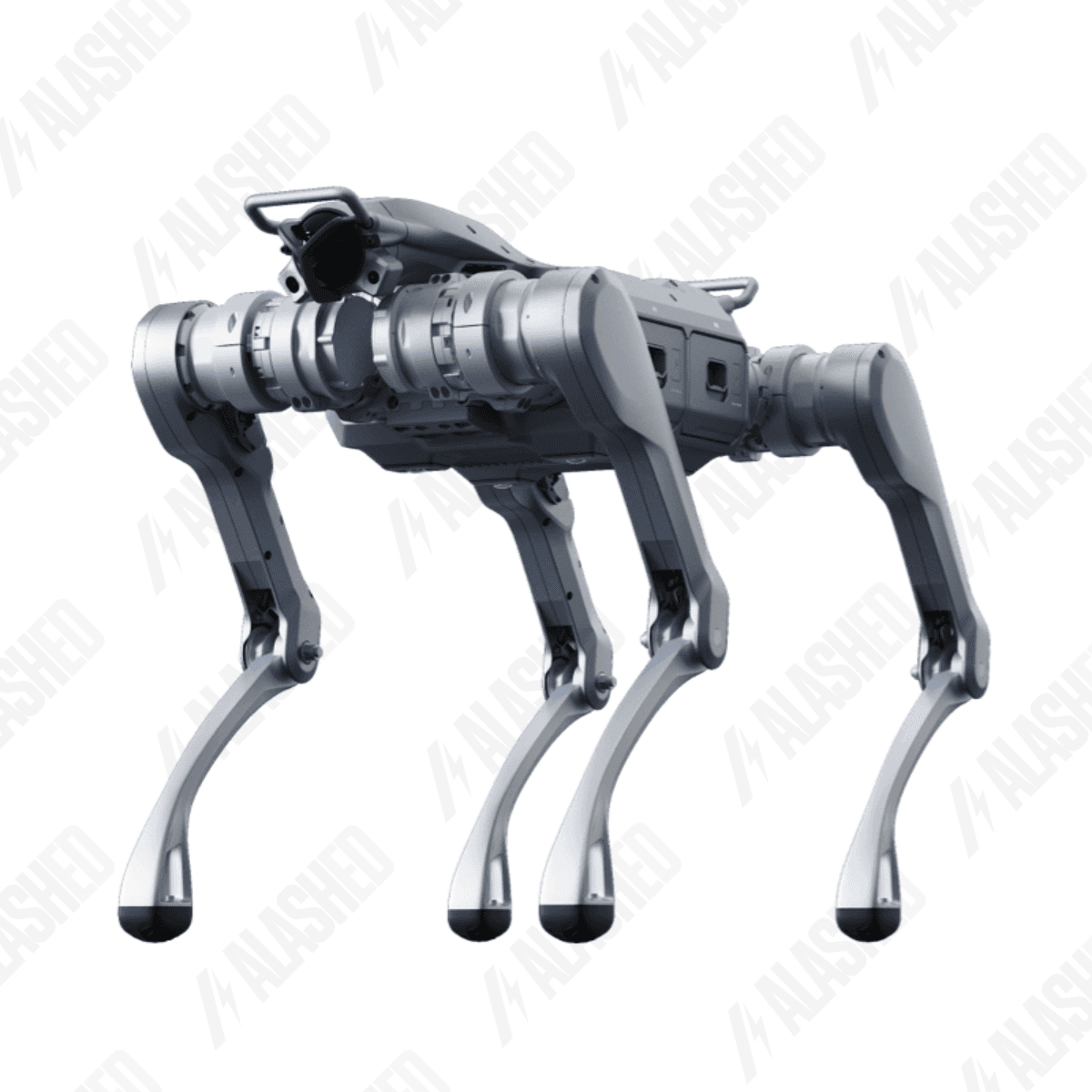
quadruped
Unitree A2
Звёздный исследователь
Compact robot for tight spaces — stairwells, technology galleries, basements.
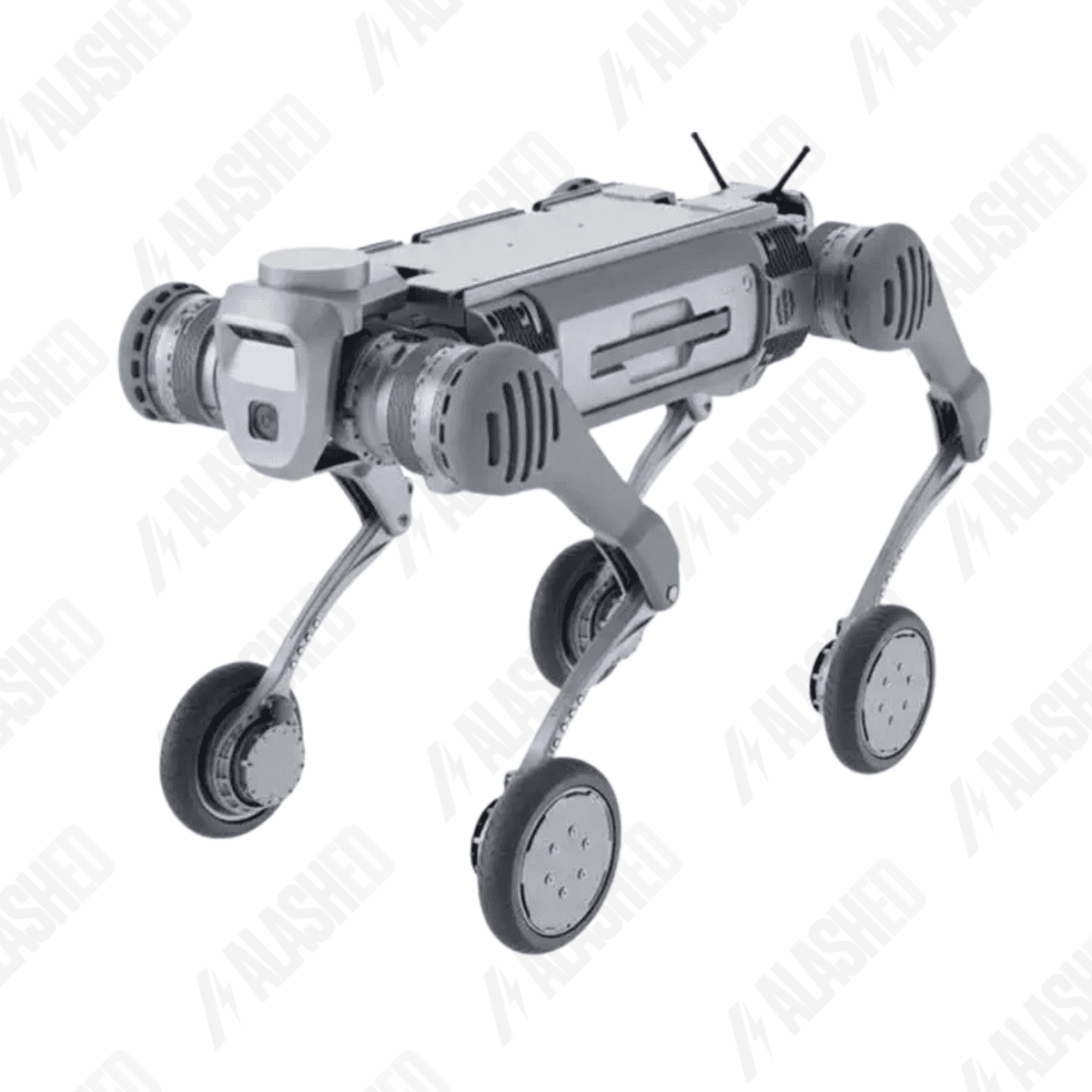
quadruped
Unitree B2-W
Дальше и эффективнее
Wheeled-legged variant for fast approach on industrial sites.

sensor
4D LiDAR L2
Бесконечная революция
4D LiDAR L2 — SLAM mapping of a collapsed building and navigation in smoke.
Deployment at a fire brigade or rescue service
- Fleet audit: which tasks the robot solves, how it fits into the equipment table.
- Crew training on fire and rescue ops: 3–5 days at the polygon.
- Integration with the command point: video link, tactical tablet, situation centre.
- Operating regulations: when the robot goes first, who decides, how information is processed.
- Storage and maintenance: fire truck or a dedicated van with a charging dock.
- Continuous operation + SLA with a hot spare and recurring drills.
Frequently asked questions
Can the robot enter a burning building?
A smoke-filled building at high temperature — yes. A zone of direct open flame — no, the stock platform has no fire-resistant build. This is the global standard for robotic fire reconnaissance. Direct burning is handled by other tools: fire trucks, hoses, thermal robots with protection.
What is the operating range from the command point?
Over Wi-Fi — 100–200 m line of sight. With mesh or LTE — several kilometres. For extended sites a relay is used on the fire truck. A beacon allows recall even on comms loss.
Does the robot work in smoke?
Yes. The thermal sees through smoke; lidar works on reflected pulses. The 4K camera sees through light smoke; in heavy smoke it relies on the thermal as the primary "eye". In real fires, Unitree robots are used in China, the UAE and other countries.
Is the robot suitable for Kazakhstan's rescue service from a regulation standpoint?
The use of robotic tools in the rescue service is governed by internal orders and standards. The robot is included in the equipment table as a "reconnaissance and observation tool". Specific sign-off is with the Emergency Situations Committee under the Ministry of Internal Affairs of Kazakhstan.
How much training does a crew need?
Basic control — 1–2 days. Full programme with recon tactics and fire-brigade integration — 3–5 days. After that the crew maintains skills via drills.
What about service after real-fire use?
After deployment the robot goes through scheduled maintenance: external wash (sooted body), battery check, sensor diagnostics, consumable replacement. Standard service — at Alashed in Almaty or via engineer dispatch. Downtime typically 1–3 days depending on contamination.
Источники
- Unitree B2 — official spec — Unitree Robotics
- Unitree A2 — official spec — Unitree Robotics
- Отраслевое решение: пожарная разведка — Unitree.kz
- Unitree B2 в каталоге — Unitree.kz
Получите расчёт под вашу задачу
Цена зависит от конфигурации и комплектации. Инженер Alashed соберёт КП и предложит подходящую модель Unitree за 30 минут.