
Robots for Mining in Kazakhstan: Inspection of Mines, Pits and Processing Plants
How Unitree B2 and A2 automate inspections of mines, open pits, conveyor lines and processing plants in Kazakhstan: dust, low temperatures, remote sites in Zhezkazgan, Karaganda and East Kazakhstan oblasts, regulator requirements.
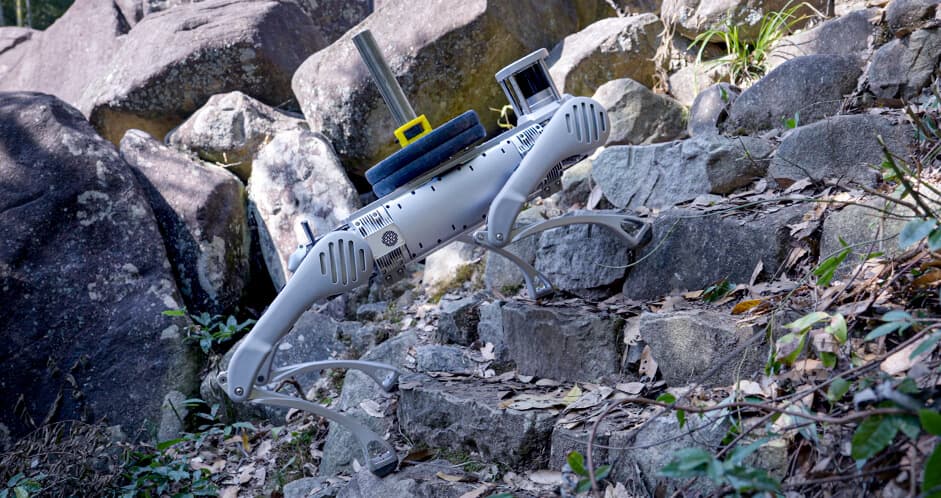
In short: for mining in Kazakhstan the baseline platform is the Unitree B2 (IP67, up to 40 kg payload, withstands dust, moisture and impact). For narrow drifts and underground workings — the compact A2. Both robots integrate with mine automation systems, monitor the gas environment, and inspect conveyors and equipment 24/7. In gas-explosive coal mines, stock platforms are replaced by Ex versions or work from the boundary of the hazardous zone.
This article is for HSE, processing, occupational safety and automation leads at mining companies. We focus on Kazakhstan specifics: coal (Karaganda oblast, Ekibastuz), copper (Zhezkazgan, Balkhash), iron ore (Kostanay oblast), uranium (Kyzylorda oblast) and non-ferrous metals in East Kazakhstan.
What the robot does in mining
Inspection of conveyor lines and processing plants
The robot walks along belt conveyors and checks bearings by thermal map, belt misalignment, idler condition and scraper wear. At the processing plant it monitors crushers, mills, flotation cells and pump groups. Every anomaly becomes a CMMS ticket — this cuts unplanned downtime by 30–50%.
Gas monitoring in underground workings
In coal mines the robot carries methane CH₄, carbon monoxide CO, oxygen O₂, hydrogen sulfide H₂S sensors. Before a crew enters the working, the robot walks the horizon and measures the atmosphere. This is critical for Karaganda oblast mines like Shakhtinskaya, Kazakhstanskaya, Tentekskaya where methane concentration requirements are especially strict.
Monitoring open pits and dumps
On open-pit operations (Shubarkol, Bogatyr, Zhayremsky GOK) the robot inspects pit walls, overburden dumps and tailings storage. LiDAR builds a 3D map; comparison with previous passes detects ground settlement, cracks and landslide-prone areas. This gives geomechanics an early signal.
Emergency recon and search for people
During cave-ins, water inrush, fire or gas release the robot goes in first. Thermal imaging finds people by their signature; gas analyzers — by air composition. Video streams to the command point via radio or mesh network. This shaves tens of minutes off the start of any rescue operation.
Kazakhstan conditions: what the robot can endure
The main filters are dust, temperature and terrain. Open pits in winter — down to −35 °C; underground horizons — stable +5 to +15 °C; surface facilities — wide range.
| Parameter | B2 | A2 | KZ mining requirement |
|---|---|---|---|
| Protection class | IP67 | IP56–IP67 | IP65+ for dust suppression |
| Operating temperature | −20 to +55 °C | −10 to +55 °C | −30 to +50 °C (winter pits) |
| Payload | up to 40 kg | up to ~15 kg | sensor pack 8–20 kg |
| Obstacle clearance | stairs 40 cm, slopes 45° | stairs 25 cm, slopes 35° | drifts, stairs, dumps |
| Battery runtime | 5+ hours | 4+ hours | inspector shift 4–6 hours |
| LiDAR (4D L2) | yes | yes | needed for GPS-denied SLAM |
| Mesh radio | optional | optional | mesh for underground |
Sensor stack for mining
- 4D LiDAR L2 — GPS-denied SLAM underground; 3D pit mapping.
- Thermal imager 640×512 — bearings diagnostics, electrical overheat, search for people during incidents.
- Gas analyzer: CH₄, CO, CO₂, O₂, H₂S — lower thresholds from 1 ppm.
- 4K camera with headlamp and optical zoom — read instruments in the dark, monitor drive nodes.
- Microphone with acoustic analytics — detect abnormal noise on conveyors and crushers.
- Optional: dust counter (PM10/PM2.5) — monitor dust levels at faces and conveyors.
- Optional: dosimeter — for uranium operations and radioactive tailings processing.
Integration with mine systems
The robot doesn't operate in isolation — it plugs into the existing stack: processing plant DCS (Siemens PCS7, Schneider, Honeywell Experion), mine automation and communications (Strata, Becker mesh networks), CMMS (Maximo, AVEVA APM), geomechanical monitoring. Data flows over OPC UA, MQTT, REST. Alerts go to the warning system and dispatcher SCADA.
Recommended models
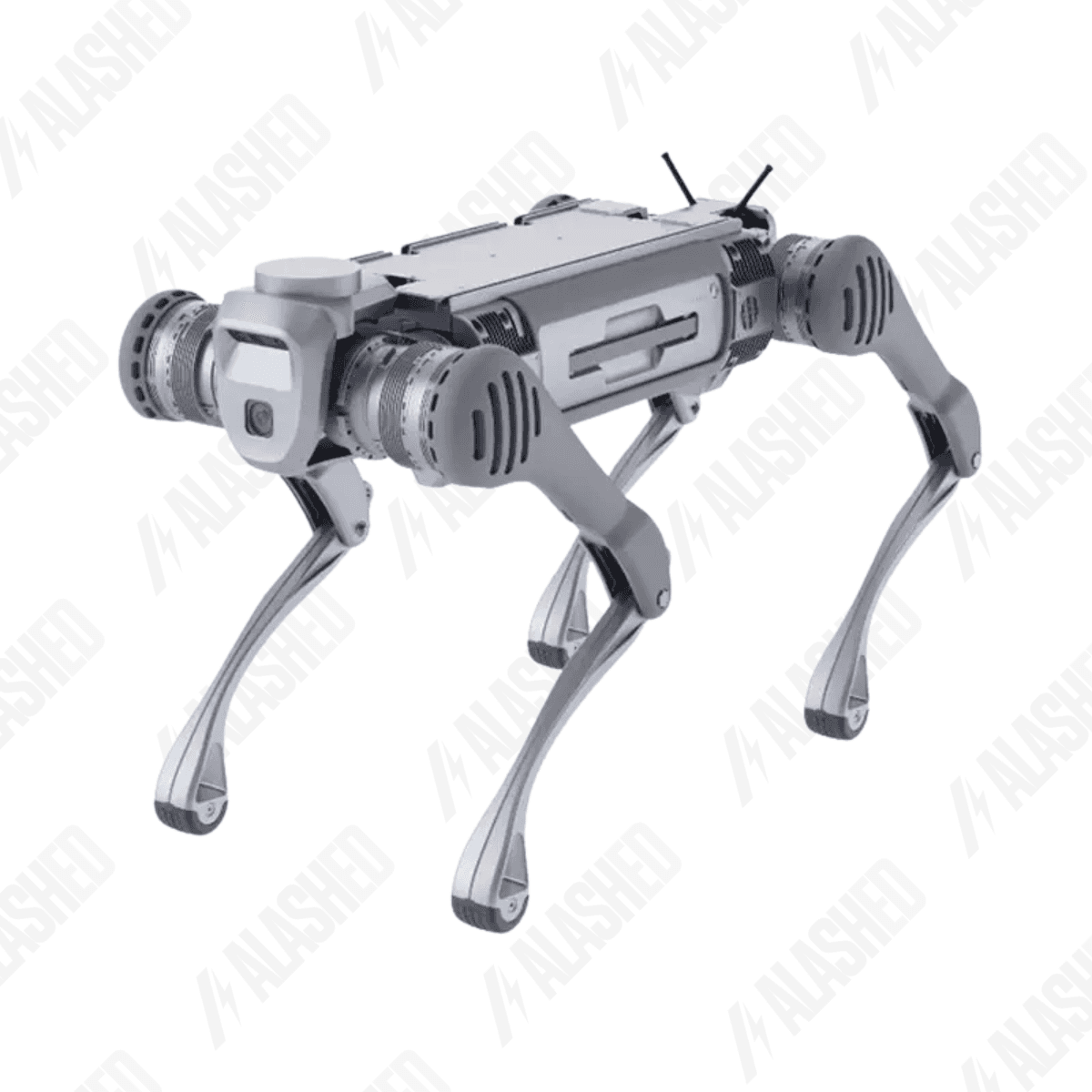
quadruped
Unitree B2
Выйди за пределы возможностей
Baseline platform for pits, processing plants and surface facilities. IP67, payload up to 40 kg, −20 to +55 °C range.
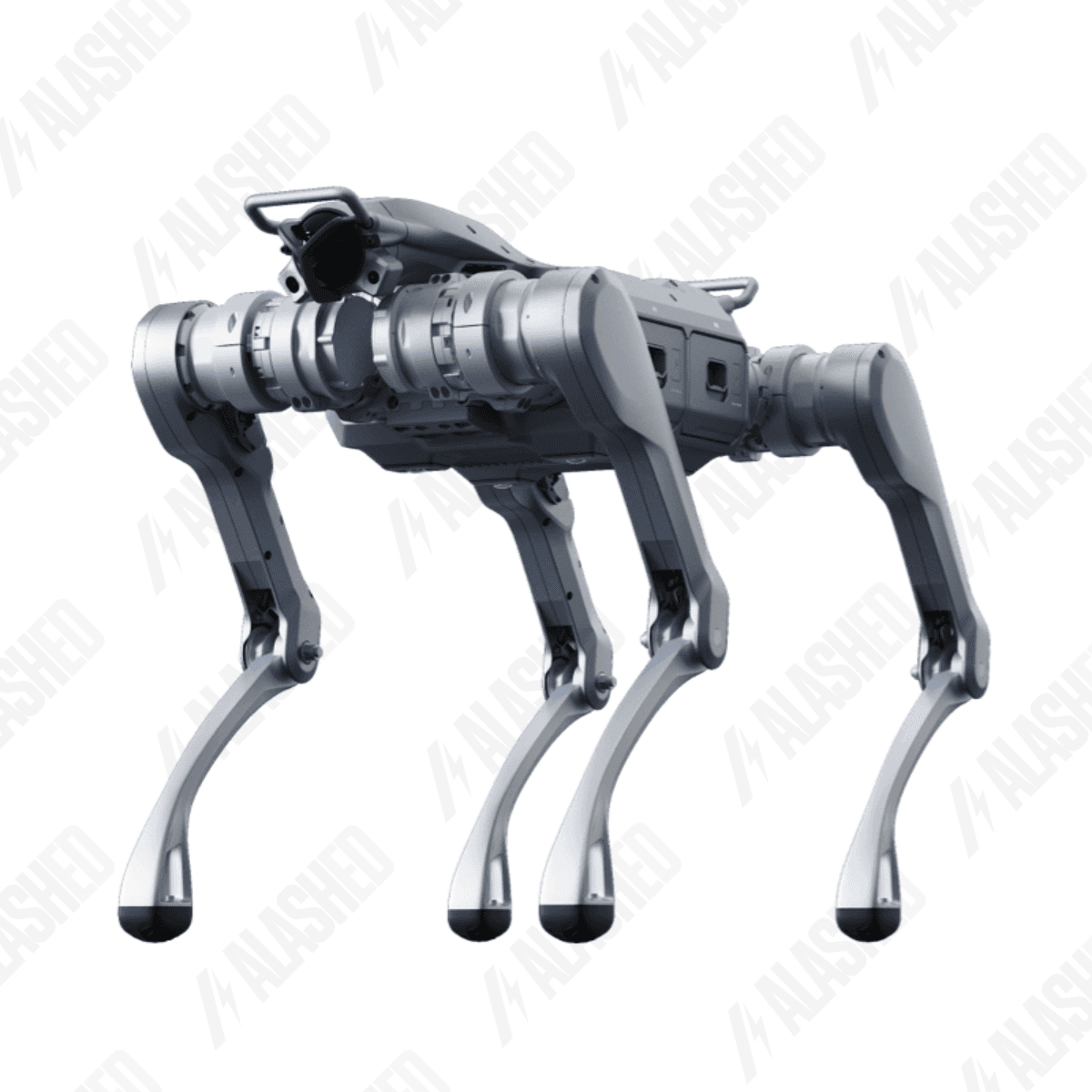
quadruped
Unitree A2
Звёздный исследователь
Compact quadruped for narrow drifts, technology galleries and mine stairs.
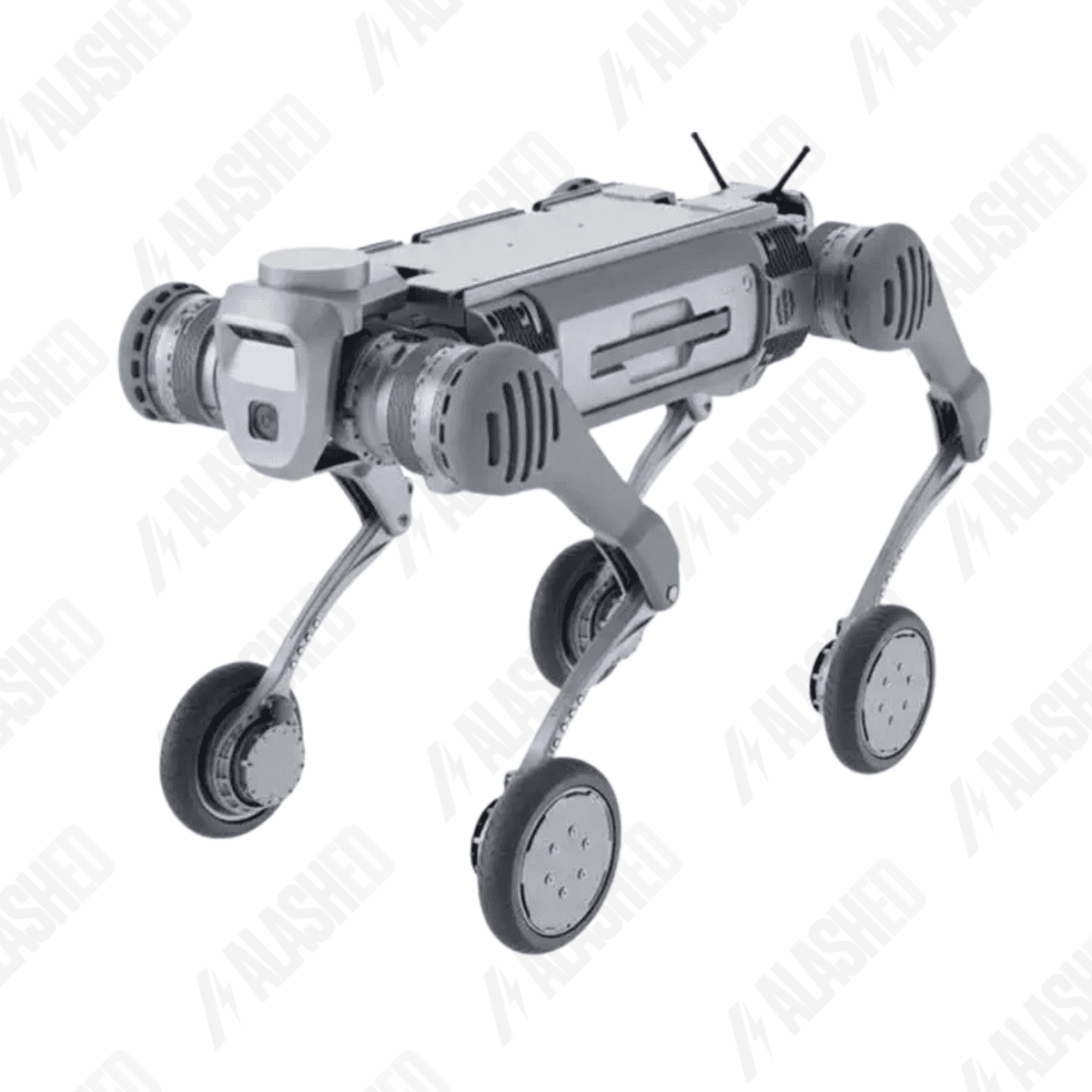
quadruped
Unitree B2-W
Дальше и эффективнее
Wheeled-legged platform for fast traversal of large plant sites and dumps.

sensor
4D LiDAR L2
Бесконечная революция
4D LiDAR L2 — standard SLAM sensor for mining. 360°×96°, 30 m range.
A typical project at a mining operation
- Site audit: route, zones, hazard classification, mining-safety requirements.
- 3–7 day pilot at one horizon / processing stage with agreed routes.
- Robot configuration, sensor pack, communications infrastructure (mesh repeaters underground).
- Integration with dispatcher SCADA, CMMS and the gas control system.
- Training for operators, dispatchers and the technicians who service the robot.
- Handover to operations + SLA support with an Alashed engineer on call.
Frequently asked questions
Can Unitree be used in gassy coal mines?
Mines of Category III and above by methane require Ex-rated equipment. Stock Unitree does not have this. Use cases: only in workings that are not gas/dust hazardous, or remote inspection from a safe boundary, or a custom pack. The solution is signed off with the operator's HSE team.
How does the robot navigate underground without GPS?
SLAM via LiDAR L2 and onboard IMU. The robot builds a map of the working and localizes against it. For long horizons the map is preloaded and the robot corrects against fiducials. Underground comms use mesh networks (Strata, Becker and equivalents).
What about dust suppression and wear in an open pit?
IP67 prevents dust ingress into the chassis. Drive bearings are sealed. After a shift the robot is washed in a wash bay. Drive lifetime is tens of thousands of km; the first parts to be replaced are the rubber foot pads (every 6–12 months depending on terrain).
Is the robot suitable for uranium mining and tailings?
Yes — for surface facilities and controlled-area dosimetry. A dosimeter is added to the chassis; background data goes into the monitoring system. For high-activity zones a separate operating procedure and platform decontamination is applied.
How many robots are needed for one site?
Depends on area and regime. A typical setup: 1 robot for a mid-scale processing plant; 2–3 robots for a large pit with separate zones. On critical sites — a hot spare + transport dock-cart.
How is service organized at a remote site?
A basic spare kit (batteries, pads, consumables) is kept on site. Heavy maintenance — at Almaty or via an Alashed engineer dispatch (SLA 24–72 hours by package). Remote diagnostics — over a secure link.
Источники
- Unitree B2 — official spec sheet — Unitree Robotics
- Unitree A2 — official spec sheet — Unitree Robotics
- Отраслевые решения Unitree.kz — Unitree.kz
- Unitree B2 в каталоге Unitree.kz — Unitree.kz
Получите расчёт под вашу задачу
Цена зависит от конфигурации и комплектации. Инженер Alashed соберёт КП и предложит подходящую модель Unitree за 30 минут.