
A Robot for Oil & Gas Inspection in Kazakhstan: Unitree B2 and A2
How a Unitree quadruped robot automates rounds at refineries, gas distribution stations, oil depots and substations in Kazakhstan. B2 vs A2 comparison, IP67 and −20 to +55 °C specs, sensor stack, SCADA integration, industrial-safety requirements and FAQ.
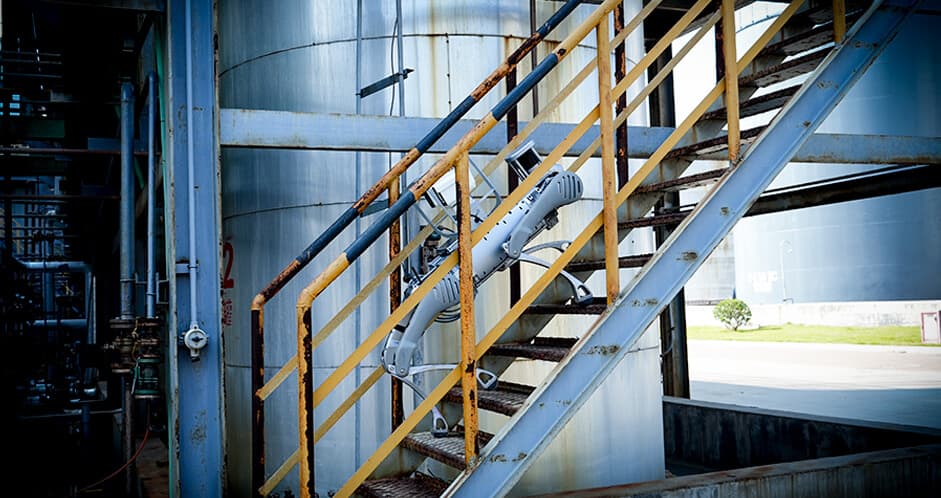
In short: for most oil & gas tasks in Kazakhstan the baseline platform is the Unitree B2 (IP67, up to 40 kg payload, 5+ hours of runtime, −20 to +55 °C temperature range). For hard-to-reach areas — the compact A2 (IP56–IP67, ~30 kg, 4+ hours). Both integrate with SCADA, stream video and sensor data to the control room in real time, and can run daily autonomous rounds 24/7.
This article is a practical breakdown for industrial-safety, operations and automation teams at refineries, gas networks and oil depots. We focus on Kazakhstan specifics: −40 to +45 °C climate, remote sites in Atyrau, Mangystau, Kyzylorda and West Kazakhstan oblasts, and the requirements of Kazakhstan's Rostekhnadzor and Ministry of Energy.
What the robot does at an oil & gas site
Routine inspection of pipelines and equipment
The robot follows a predefined route with fixed checkpoints. At each point it captures a photo, measures temperature and vibration, records methane and propane levels. All data is GPS- and time-stamped and uploaded to SCADA or the historian. One robot replaces 2–3 inspectors per shift and works without days off.
Gas leak monitoring and thermal anomalies
Gas analyzers (CH₄ methane, C₃H₈ propane, H₂S hydrogen sulfide) and a thermal imager are mounted on the chassis. The robot finds leaks and overheated nodes before they cause an incident. Thermal imaging helps detect faulty bearings, slipping couplings and electrical insulation problems.
Emergency reconnaissance and work in hazardous zones
When gas detectors trigger or after an incident, the robot enters the area first. It streams live video, a thermal map and gas-analyzer readings to the control room. Humans enter the hazardous zone only after the robot's assessment — this reduces risk to personnel and shortens downtime.
State documentation and compliance
Each round generates a machine-readable report: checkpoint list, photos, measurements, anomalies, GPS track and timestamps. This helps meet industrial safety requirements, internal HSE standards and audits from Kazakhstan's Ministry of Energy and the Committee for Industrial Development.
Kazakhstan conditions: what the robot can endure
Sites are scattered — from the Caspian shelf to Zhanazhol and Kashagan. Climate and operating environment are the main filter for platform choice.
| Parameter | Unitree B2 | Unitree A2 | Minimum for KZ oil & gas |
|---|---|---|---|
| Protection class | IP67 | IP56–IP67 | IP65+ for outdoor sites |
| Operating temperature | −20 to +55 °C | −10 to +55 °C | −30 to +50 °C (heated shelter in winter) |
| Battery runtime | 5+ hours | 4+ hours | inspector shift — 4–6 hours |
| Payload | up to 40 kg | up to ~15 kg | sensors 5–15 kg + reserve |
| Max speed | up to 6 m/s | up to 5.5 m/s | 1.5–2 m/s is enough for routes |
| Obstacle clearance | stairs up to 40 cm, slopes up to 45° | stairs up to 25 cm, slopes up to 35° | stairs, racks |
| LiDAR support (4D L2) | yes | yes | needed for SLAM |
Sensor stack for the oil & gas scenario
The robot platform is a "skeleton" on which an industry sensor pack is mounted. A typical configuration for a refinery or transmission pipeline:
- 4D LiDAR L2 — for SLAM navigation and obstacle detection in the dark.
- Thermal imager 640×512 or 1024×768 — detect overheated equipment and people in hazardous zones.
- Gas analyzer for CH₄, C₃H₈, H₂S, CO, CO₂ — lower limits from 1 ppm.
- High-resolution camera (4K) with optical zoom — read instrument gauges and tag labels.
- Microphone + audio analytics — detect acoustic anomalies, leak hissing, cavitation.
- Optional: ionization counter / explosive-atmosphere detector (ATEX) for Zone 1/2 work.
Integration with SCADA, MES and the safety system
The robot doesn't operate "on its own" — it's part of the automation stack. Through ROS2 and the Unitree SDK, data flows up: sensor readings to SCADA / historian via OPC UA or MQTT, alarms to fire automation and CCTV, routes to WMS/CMMS for scheduled maintenance. Integrations with Siemens, Schneider, Honeywell, AVEVA, GE and Russian standards are supported.
Recommended models
quadruped
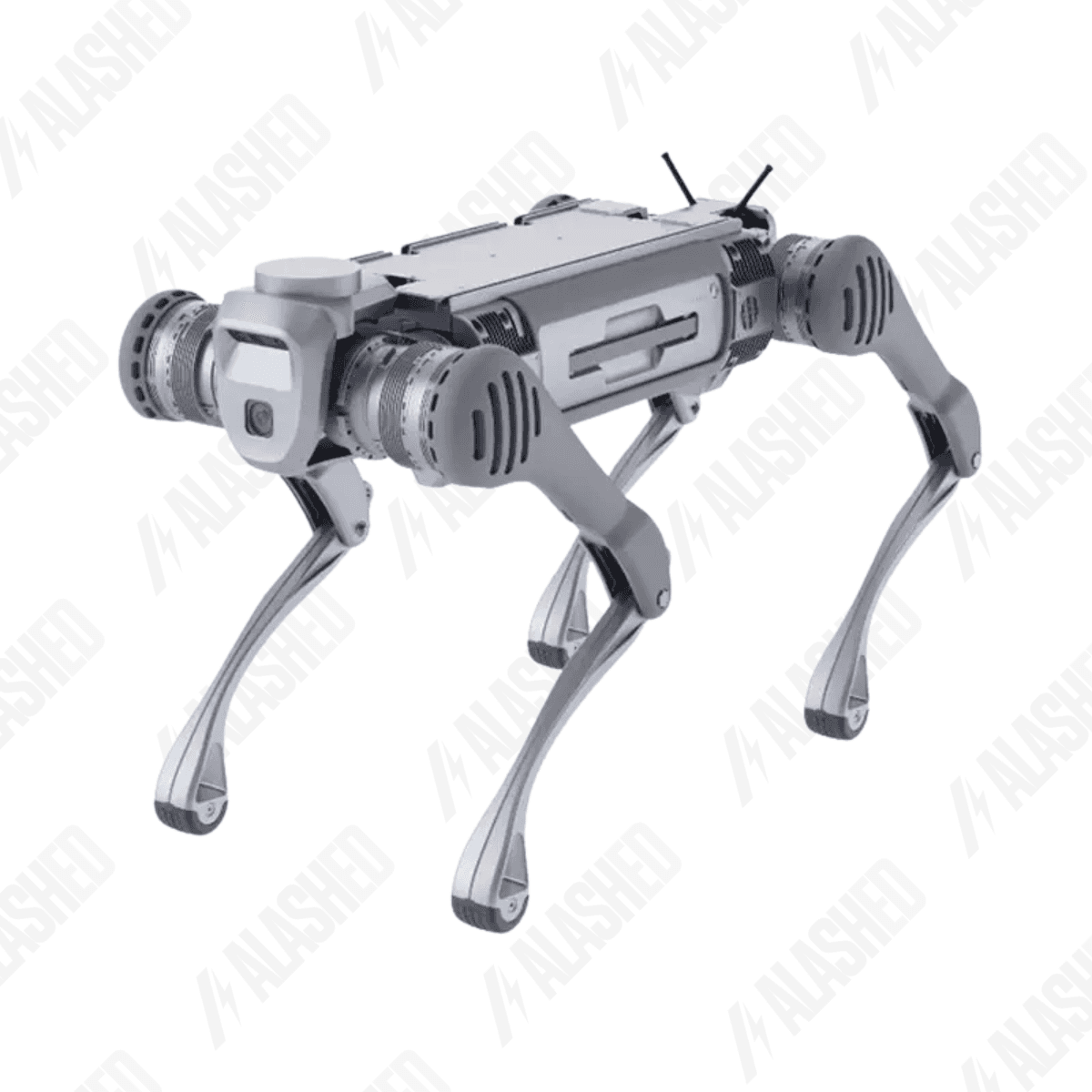
Unitree B2
Выйди за пределы возможностей
Baseline platform for refineries, gas networks and substations. IP67, −20 to +55 °C, up to 40 kg payload, 5+ hours of runtime.
quadruped
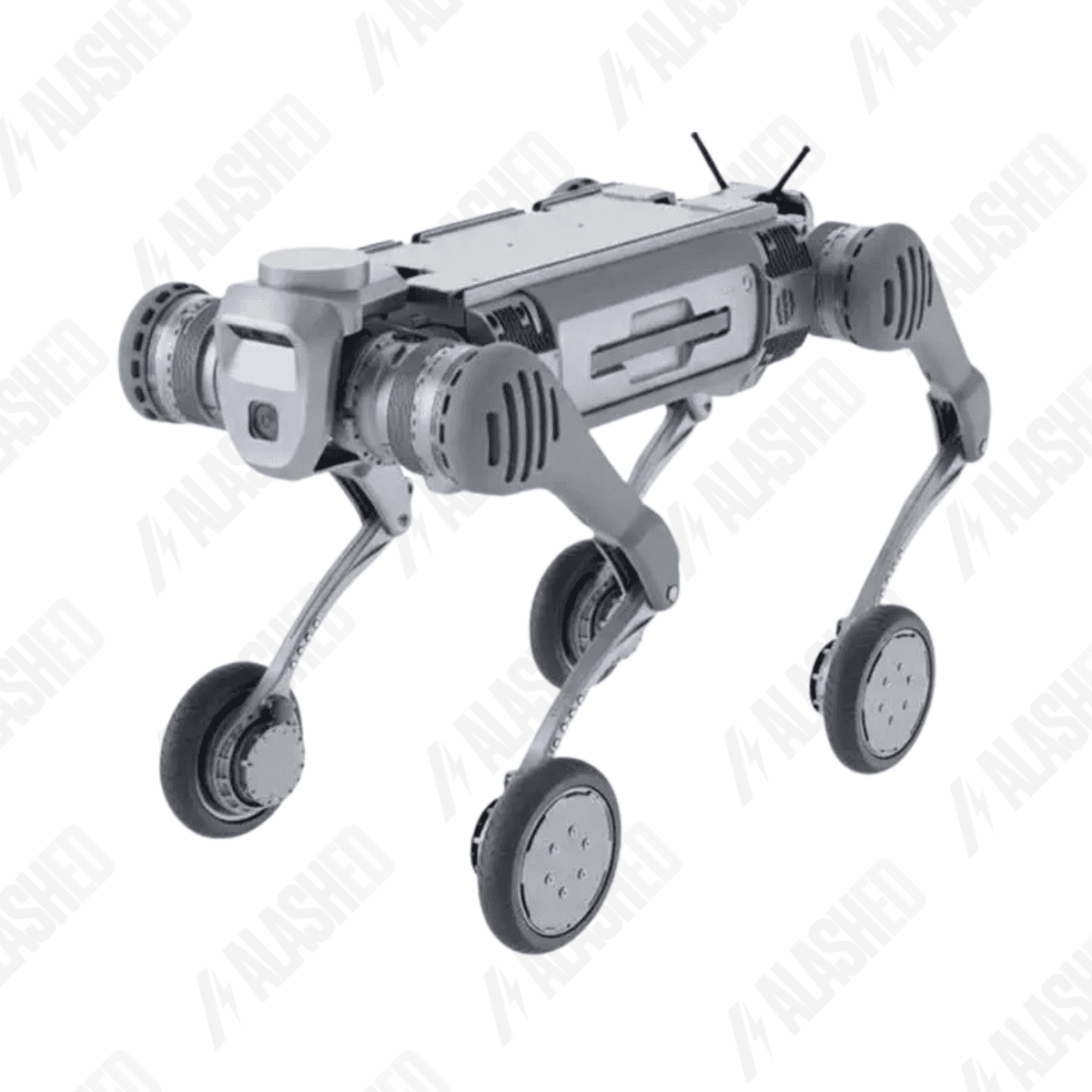
Unitree B2-W
Дальше и эффективнее
Wheeled-legged B2 variant — for fast rounds across large industrial sites with asphalt and pipe racks.
quadruped
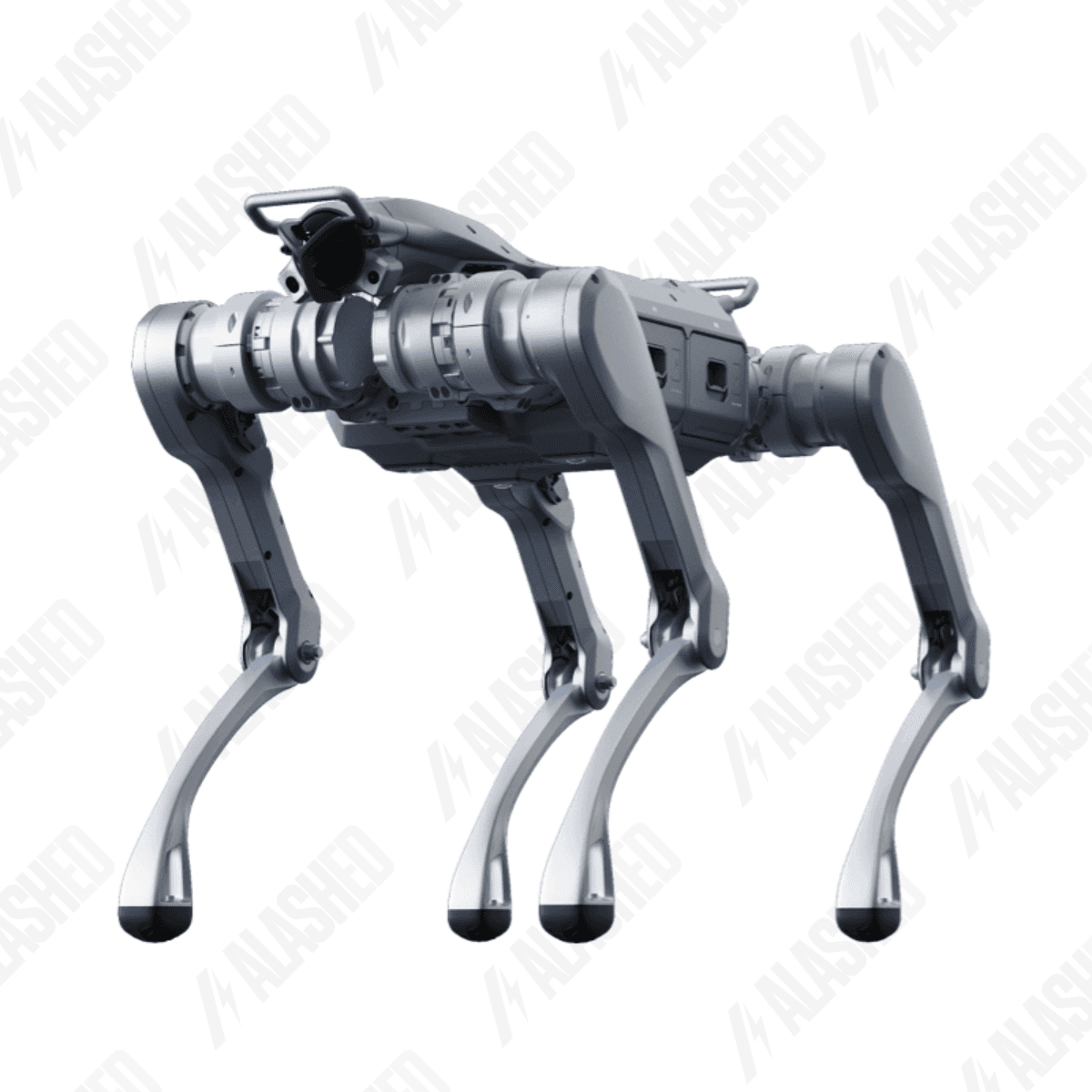
Unitree A2
Звёздный исследователь
Compact quadruped for hard-to-reach areas, inspection in tight spaces, on platforms and around compressor stations.

sensor
4D LiDAR L2
Бесконечная революция
4D LiDAR L2: 360°×96°, 30 m range, 64,000 points/sec — a standard SLAM sensor for refinery environments.
A typical project: where to start
- Site audit by an Unitree.kz engineer: route, checkpoints, sensor requirements, Ex-zone constraints.
- Pilot round — 1–3 days — to verify the route and data quality.
- Robot configuration, sensor stack and infrastructure (heated shelter, charging dock, network).
- Integration with SCADA / historian and the CCTV system.
- Operator and maintenance training (included with delivery).
- Handover into operations + SLA support (4–24 hour response depending on package).
Frequently asked questions
Is the Unitree B2 suitable for winter operation in West Kazakhstan?
The B2 baseline range is −20 to +55 °C. At sustained −30 °C and below a heated shelter with a charging dock is recommended: the robot goes out for rounds and returns to warm up. This is standard practice for robotic platforms in oil & gas worldwide.
Can the robot work in Ex-zones (explosive atmosphere)?
Stock Unitree versions are not Ex-certified. For Zone 0/1, imaging is done from the zone boundary, or a custom pack is used. For Zone 2 the stock platform with proper operating procedures is often enough — this is agreed with your HSE team case by case.
How does the robot return for charging?
Autonomous return to a charging dock via SLAM map and an automated charging cycle are supported. The robot monitors its own battery level and returns before critical to avoid stalling in the field.
How many rounds per day can one robot do?
Depends on route length. A typical scenario is 4–6 rounds per day of 2–4 km each with charging stops. On large sites a fleet of 2–3 robots with a shared map is used.
What certifications does Unitree have for the Kazakhstan market?
Deliveries come with Unitree Robotics certifications (CE, FCC). For government tenders, Alashed prepares the EAC / Kazakhstan compliance certificate and technical documentation as required. Lead time — 2–4 weeks.
What if the robot can't handle the task — is there a return option?
Before the main delivery a 1–7 day pilot is run on your site with a real route. If the solution doesn't fit after the pilot — we switch to rental mode or take the platform back. Exact terms are fixed in the contract.
Who is Unitree already working with in oil & gas?
Unitree Robotics supplies robots to oil & gas customers in China, the UAE, Saudi Arabia, Russia and other countries. In Kazakhstan, Alashed is launching pilots at fields in the western regions — case studies are published after sign-off with the clients.
Источники
- Unitree B2 — official spec sheet — Unitree Robotics
- Unitree A2 — official spec sheet — Unitree Robotics
- Unitree Robotics SDK on GitHub — Unitree Robotics
- Отраслевое решение: нефтегаз — Unitree.kz
- Unitree B2 на Unitree.kz — Unitree.kz
Получите расчёт под вашу задачу
Цена зависит от конфигурации и комплектации. Инженер Alashed соберёт КП и предложит подходящую модель Unitree за 30 минут.